Take two magnets of the same grade and the same volume: a long thin rod and a flat disc. The rod shrugs off heat and opposing fields; the disc quietly gets weaker. Same material, same strength rating - so why the difference? The answer is shape.
Every magnet fights itself
A magnetized magnet has a north end and a south end. The field between those poles runs from north to south - including through the inside of the magnet, where it points against the magnetization. This internal "demagnetizing field" is constantly trying to weaken the magnet.
Long and thin wins
The strength of that internal opposing field depends on how close the poles are. In a long thin rod, the poles are far apart, so the opposing field is weak - the magnet barely fights itself and stays strong. In a flat disc, the poles are almost touching, so the opposing field is fierce - the magnet is its own worst enemy.
Stability by shape
| Shape | Opposing field | Stability |
|---|---|---|
| Long thin rod | Very weak | Excellent |
| Cylinder, L/D ≈ 2 | Weak | Very good |
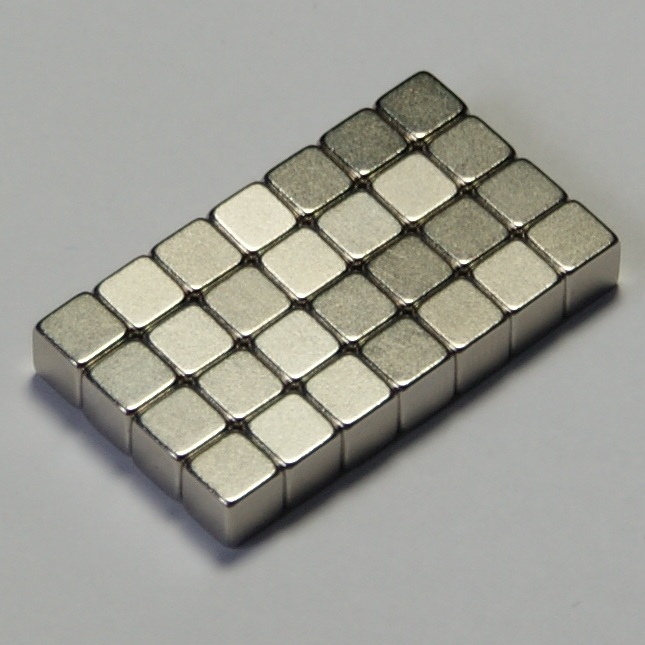
| Block / cube | Moderate | Good |
| Flat disc (D12 × 1 mm) | Strong | Poor - fails easily |
Approximate behavior for magnetization along the axis.
Two practical rules
- Magnetize along the longest dimension. That is the direction where the magnet resists demagnetization best.
- Thin or flat parts need a higher grade letter (H, SH, UH, EH). Shape and grade work together.
Good news: you can use this. Closing the magnetic circuit with steel - putting the magnet into a motor, for example - weakens the opposing field dramatically, so the same magnet tolerates far more heat. Shape is a design lever, not just a constraint.
Read on: the permeance coefficient Pc → · magnets and heat →