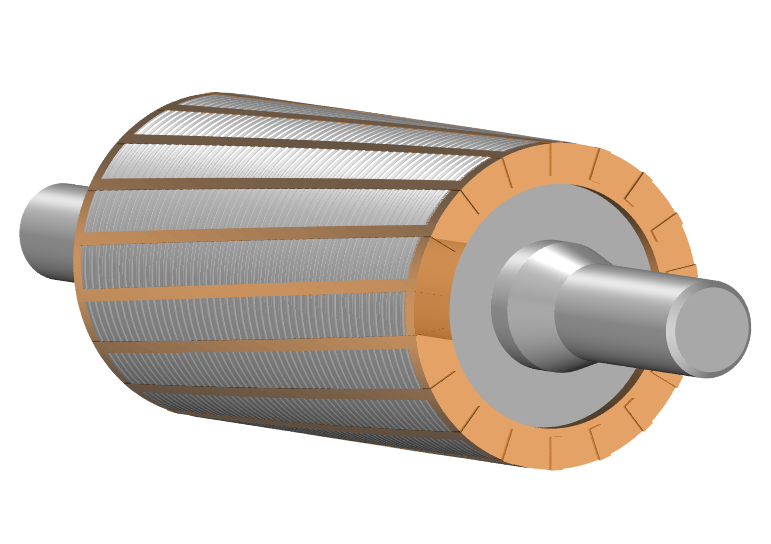
Electric motors and permanent magnets are a perfect pair. The magnet provides a constant magnetic field, the electric current provides motion, and together they turn electricity into rotation.
Why motors need magnets
In a simple DC motor, the rotor (the spinning part) carries magnets or coils, and the stator (the fixed part) provides the opposite field. Magnets and coils pull on each other, and that pull makes the rotor turn. Without permanent magnets, every motor would need extra wiring and power to create its own magnetic field — heavier, less efficient and more expensive.
Why NdFeB is the favorite
NdFeB magnets are small, light and extremely strong. That means motor designers can make motors smaller and more efficient while delivering the same power. This matters most in:
- Electric vehicles — traction motors that must be compact and powerful.
- Home appliances — washing machines, air conditioners, fans.
- Power tools — cordless drills, screwdrivers.
- Robots and drones — where every gram counts.
Two placement styles
- Surface-mounted — magnets glued on the rotor surface. Simple and common.
- Embedded (IPM) — magnets buried inside the rotor. Stronger torque, used in EVs and high-performance motors.
What motor makers look for
For motors, the key magnet properties are magnetic strength (higher grade = more torque), heat resistance (motor interiors get hot — grades like H and SH survive 120–150 °C), and consistent dimensions for automated assembly.
Read on: why magnets hate heat → · grades explained →