Most neodymium magnets are sintered: powder pressed and heated until it fuses into a solid block. But there is a second, quieter route — hot pressing. Instead of sintering, the powder is squeezed under high temperature and pressure until it becomes a dense magnet. It sounds simple, and the results are impressive: nearly as strong as sintered NdFeB, without the expensive heavy rare earths.
How it works
The process starts with a special NdFeB powder made by melt spinning — molten alloy is poured onto a spinning wheel and cools almost instantly into a fine powder with tiny grains. That powder goes into a press at about 700 °C, where it is compressed into a fully dense magnet. A second step, hot deformation, squeezes the part like forging, aligning the microscopic grains so the magnet becomes even stronger.
Why the tiny grains matter
The secret is grain size. Fine grains make a magnet harder to demagnetize — and unlike sintering, hot pressing barely grows the grains. That is why hot-pressed NdFeB reaches high heat resistance without adding dysprosium or terbium, the expensive elements that sintered high-temperature grades depend on.
Where you'll find them
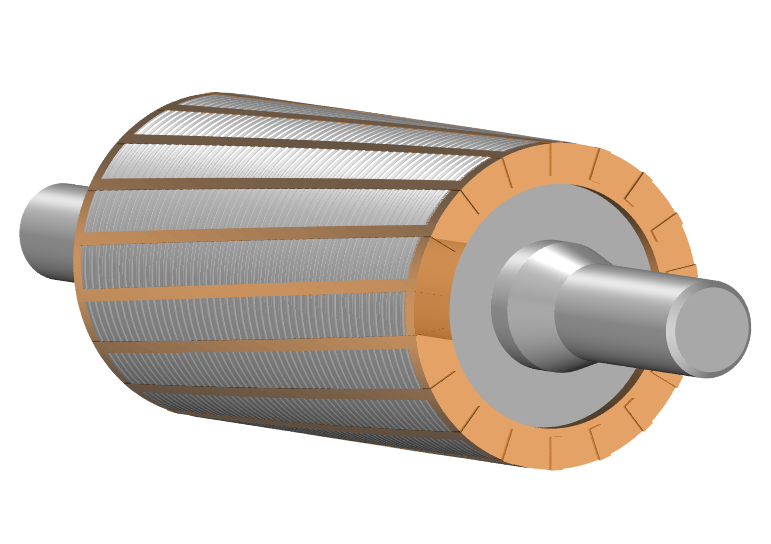
Hot-pressed magnets are mostly made as thin rings, magnetized so the field points outward all around the circumference. Their signature job is the electric power steering (EPS) motor: millions of cars steer with a hot-pressed NdFeB ring inside the motor, where smooth, quiet torque matters. You'll also find them in other small precision motors.
The trade-offs
The technology is niche and closely guarded, so hot-pressed magnets cost a premium — and they only come in ring shapes. For larger or unusual shapes, sintered NdFeB remains the standard.
Read on: the next-generation magnet: SmFeN → · what is NdFeB →