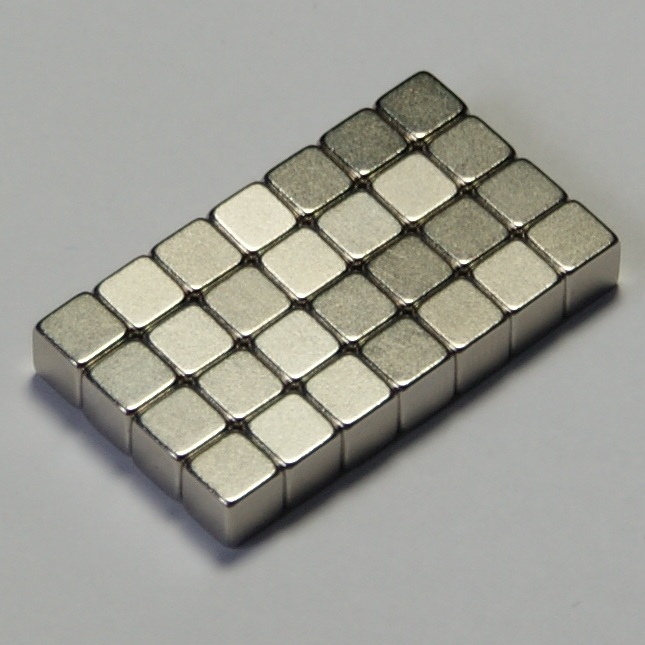
Sintered neodymium magnets are the strongest permanent magnets you can buy — and the strongest ones are the ones that bite. A small block can pull with many times its own weight, and that force, concentrated between two small surfaces, can genuinely hurt. The good news: almost every accident is avoidable with simple habits.
Pinched fingers are the classic injury
Two strong magnets — or a magnet and a steel surface — snap together faster than your reflexes. Skin, fingers and gloves caught between them get crushed hard enough to bruise, cut or even fracture bone. Never put a finger between two magnets about to close — guide them together edge-first or use a cardboard spacer. Keep paired magnets separated in storage, and if skin gets pinched, slide them apart sideways — shear is far easier than pulling.
Brittle magnets can shatter
Sintered NdFeB is hard but brittle, more like ceramic than metal. Two magnets colliding can chip or shatter and fling sharp fragments. Wear eye protection when handling large magnets, and inspect parts for edge chips before use.
Keep strong magnets away from...
- Medical implants — pacemakers, ICDs and insulin pumps can be disturbed by stray fields. Never carry strong magnets close to the chest, and keep them out of MRI rooms entirely.
- Cards and electronics — credit-card stripes, watches, hearing aids and magnetic media can be erased. Keep magnets out of pockets and away from wallets.
- Children — small strong magnets are an ingestion hazard; swallowed together they can pinch tissue across the bowel wall and need emergency surgery. Store small magnets sealed and out of reach.
The same force that makes magnets useful makes them dangerous. Move magnets slowly, keep fingers out of the gap, and store them so they cannot snap together.
Read on: air freight rules for magnetized parts → · what happens to magnets at end of life →