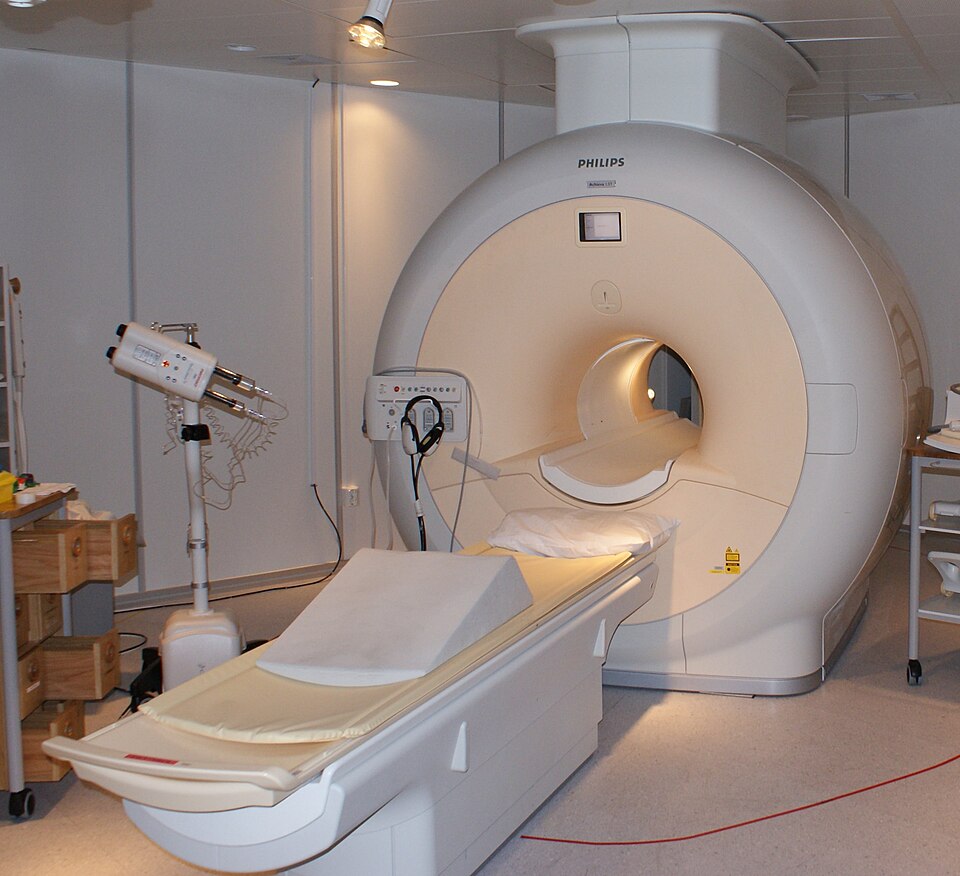
Medicine is full of magnets. The most famous is the MRI scanner — a machine that uses an incredibly strong magnetic field to image the inside of the body without any radiation. But magnets also show up in surgery, dentistry and even inside the body itself.
The MRI giant
An MRI magnet is usually a superconducting electromagnet, kept at very low temperature, producing a field far stronger than any fridge magnet. The patient lies inside while the field aligns water molecules in the body, and the scanner turns the signal into detailed pictures of organs, joints and soft tissue.
Small magnets, big jobs
- Surgical retrievers — small magnetic tools that find and pull steel needles and fragments out of wounds.
- Dental attachments — tiny magnets hold dentures in place and keep them secure while eating and talking.
- Magnetic implants and sensors — magnetized parts in some implants, plus magnetic sensors that track position inside medical devices.
- Drug delivery research — scientists are testing magnets that guide drug particles to a specific spot, so treatment reaches only the target.
What about magnet therapy?
You may have seen bracelets, insoles or mattresses claiming magnets heal pain. The honest answer: there is no good scientific evidence that static magnets cure anything. At best they are harmless; at worst they delay real treatment. If something hurts, see a doctor — not a magnet.
Practical tip
Never take strong magnets near an MRI room. Even small magnets can fly across the room and hit the scanner, and anything metallic in your body can be dangerous inside the field.
Read on: what is NdFeB → · magnet safety basics →