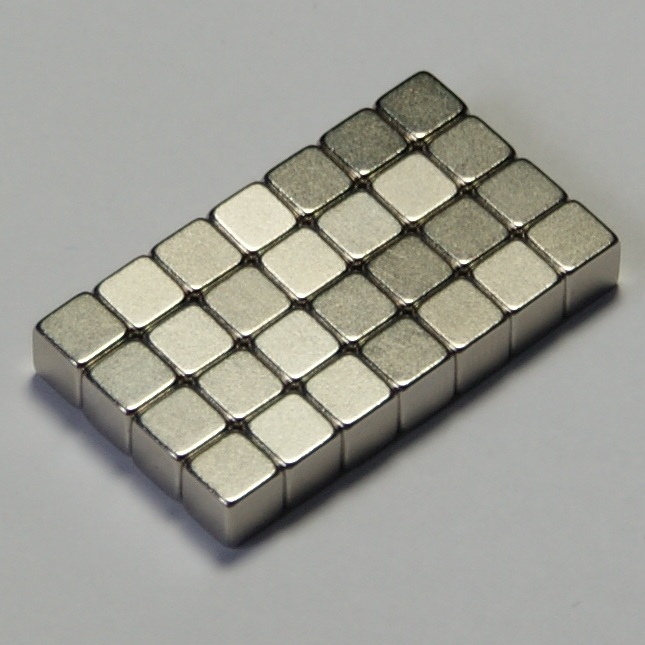
Bare sintered NdFeB rusts easily — it is a porous material with a reactive surface, and corrosion can start within days. For parts that will be stored, shipped or bonded later, the cheapest insurance on the market is phosphating: a chemical treatment that grows a thin grey phosphate film on the surface, like a light suit of armour, for pennies per part.
How it works
The magnet is dipped in a phosphate-based solution, which reacts with the surface to form a thin, water-insoluble phosphate layer, only a few micrometres thick. The chemistry can be tuned with different metals — zinc, iron or manganese — but the idea is the same. The process line is simple — clean, rinse, dip, dry — and needs no fancy equipment, which is why it costs so little.
Two jobs
Phosphating protects in two ways. First, it shields parts during storage and transport, buying weeks or months of shelf life against normal air and humidity — and the clean film can be vacuum-sealed, which stretches that protection even further. Second, epoxy paints and adhesives wet a phosphate surface beautifully, so phosphating is the standard preparation before magnets are bonded or painted: the film makes the glue stick far better.
What it is not
Do not confuse phosphating with plating. A phosphate film is a few micrometres of chemistry that guards for weeks to months; it is a bridge between processes, not a final coating for outdoor or salt-laden service. The good news: it is easily stripped later, so it never blocks a zinc, nickel or epoxy finish.
Read on: all coatings compared → · passivation: the invisible helper →