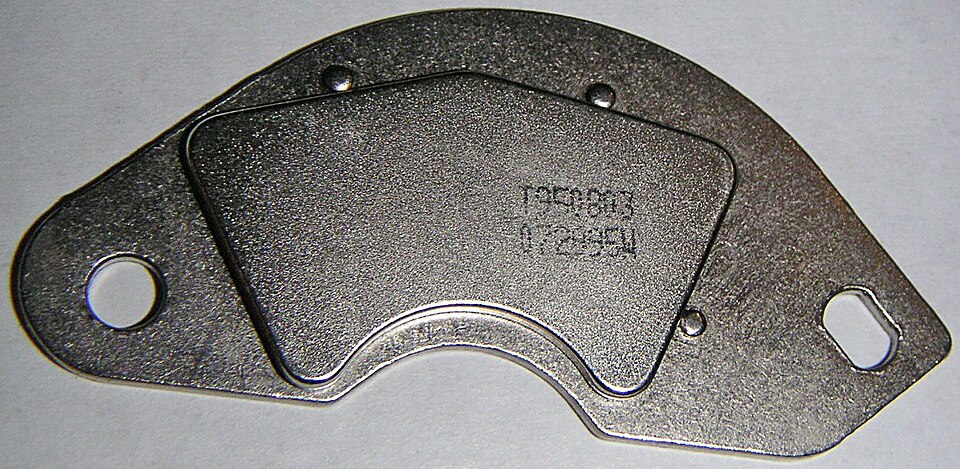
Imagine a magnet you could pour into a mold like plastic. That's exactly what a bonded magnet is: fine magnetic powder mixed with a plastic or rubber binder, then injection-molded straight into its final shape. Rings, arcs, gears, thin sheets — if you can mold it, you can magnetize it.
Powder plus plastic
The recipe is simple. NdFeB alloy is turned into a fine magnetic powder, then blended with a binder (usually plastic) and heated and pressed into the finished part. Because the part comes out of the mold ready to use, there is no cutting, no grinding, no waste — and the plastic skin protects the magnet, so most bonded parts need no coating.
Weak but flexible
The trade-off is performance. The plastic binder isn't magnetic, so it dilutes the magnet: bonded NdFeB reaches only about 12 MGOe, versus up to 55 for the best sintered grades. But bonded magnets win everywhere else:
- Any shape — complex profiles, thin walls and tiny parts straight from the mold.
- Precision — consistent dimensions, shot after shot, ideal for automated assembly.
- Smart magnetization — a single ring can be magnetized with many poles around its circumference, which sintered magnets struggle with.
- Low eddy losses — the binder makes them electrically resistive, so they run cool in AC motors.
Where you find them
Bonded magnets are everywhere in small electronics: hard-disk drive motors, phone vibration motors, printers, car window and wiper motors, and countless sensors. If a tiny motor spins smoothly in a device you own, chances are a bonded magnet is inside it.
Read on: radial multipole rings → · the three types of NdFeB →