A brushless DC motor — BLDC for short — is the quiet, long-lasting cousin of the classic brushed DC motor. It does the same job with none of the wear parts.
What "brushless" means
In an old brushed motor, spring-loaded carbon brushes press against a spinning commutator to switch the current and keep the motor turning. The brushes wear out, spark, and make noise. A BLDC motor removes them entirely: the switching is done electronically by the motor drive, which reads the rotor position and fires the stator coils at just the right moment.
Inside a BLDC motor
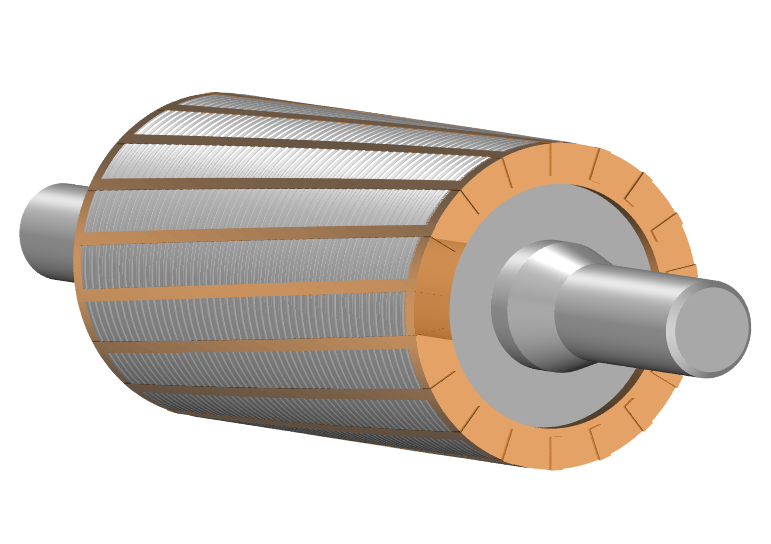
The layout is simple: stator coils on the outside, and a rotor with permanent magnets on the inside. The drive creates a rotating magnetic field in the stator, and the rotor magnets chase it. Because the magnets sit on the rotor, no current ever has to reach a spinning part — no brushes, no commutator, no wear.
Why buyers prefer them
- Longer life — nothing rubs, so nothing wears out.
- Quieter — no brush chatter, smoother operation.
- More efficient — no friction loss and no sparking.
Where you will find them
BLDC motors are the workhorses of modern life: drones, PC and ceiling fans, e-bikes, power tools, HVAC blowers, and countless automotive fans and pumps.
The rotor uses permanent magnets, usually NdFeB for the best torque in a small size. The drive needs to know the rotor position to switch the coils correctly; many BLDC motors use Hall sensors for this, while sensorless designs read the back-voltage instead. Either way, the magnets do the heavy lifting — that is what makes brushless motors so efficient.
Read on: magnets in motors → · Hall sensors explained →