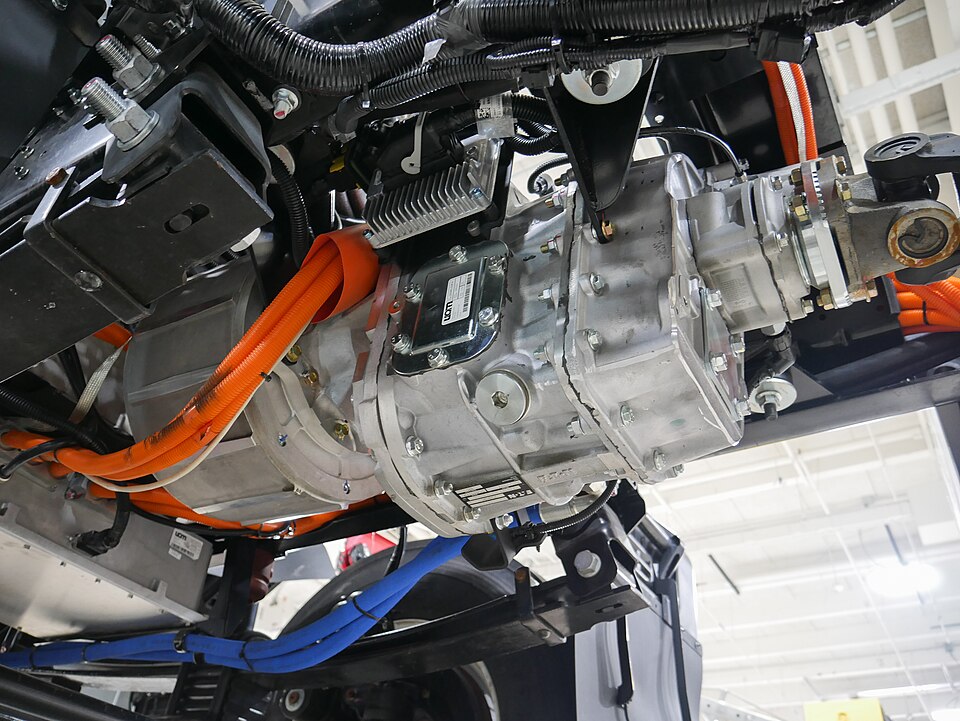
Inside a permanent magnet synchronous motor — PMSM for short — the rotor carries permanent magnets and spins in perfect sync with the rotating magnetic field produced by the stator. No slip, no lag: just clean, synchronized rotation.
The basic idea
The motor has two main parts: a stator with copper windings and a rotor that holds permanent magnets. When the drive feeds alternating current into the stator windings, it creates a magnetic field that rotates around the motor. The rotor magnets lock onto that field and follow it around, turning step-for-step with the electrical frequency.
Because the magnets do the field work, the rotor needs almost no electric current of its own. That is the secret of the PMSM's efficiency.
Why PMSM motors are everywhere
PMSM designs win on three points:
- High efficiency — the magnets provide the field for free, so losses stay low at almost every speed.
- High torque density — strong magnets mean strong torque from a compact package.
- Precise control — the rotor position is known at every moment, so the drive can command torque and speed accurately.
Where you will meet them
Electric vehicles are the biggest show: most EV traction motors are PMSMs. You also find them in home appliances like washing machines and air conditioners, in industrial servo and spindle drives, and in anything that values efficiency in a small space.
The rotor magnets are usually NdFeB magnets — the strongest magnet family — often shaped as arcs or blocks glued to the rotor core. A practical tip: because NdFeB weakens when hot, designers watch operating temperature closely, and high-power motors add cooling to keep the magnets happy.
Read on: magnets in motors → · temperature and magnets →