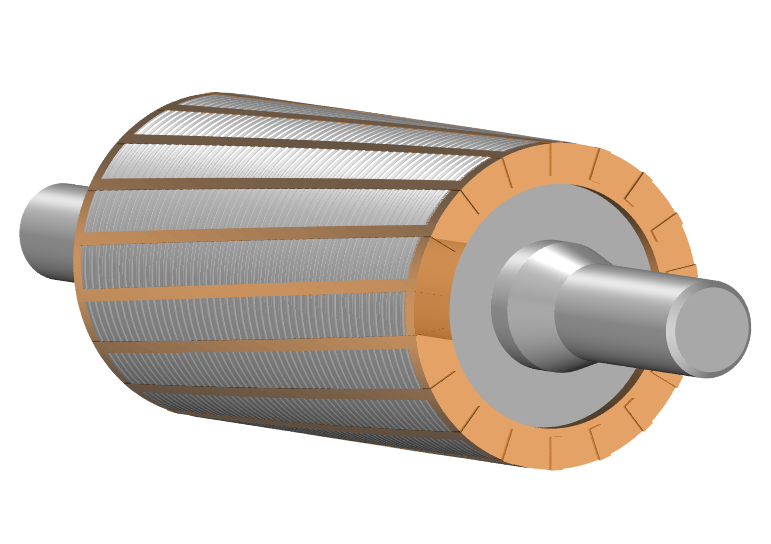
Imagine a magnet you could switch on and off, or make stronger with a twist of a knob. That is an electromagnet — a magnet powered by electricity rather than by the material itself.
Coil, core, current
An electromagnet is simple: a coil of wire wrapped around an iron core. When current flows through the coil, it creates a magnetic field, and the iron core concentrates that field. Switch the current off and the field disappears almost instantly. Change the current and you change the strength. Reverse the current and the poles swap — the same coil can act as a north or a south magnet on demand. A permanent magnet can do none of those tricks. This is why electromagnets power everything from doorbells to industrial cranes.
Electromagnet vs permanent magnet
| Electromagnet | Permanent magnet | |
|---|---|---|
| Field on demand | Switchable | Always on |
| Power needed | Continuous | None |
| Typical jobs | Lifting, relays, MRI | Motors, sensors, holding |
Both types earn their keep — the right choice depends on the job.
Where you find them
Scrap yards lift entire cars with huge electromagnets, then release them with the flick of a switch. Door locks, relays and circuit breakers open and close on command. MRI machines wrap patients in giant magnets, and particle accelerators bend beams with them. Factories use them to sort scrap metal and move steel parts along conveyor lines. In motors, electromagnets and permanent magnets often work as a team: one produces the rotating field, the other reacts to it.
Practical tip: for lifting and holding jobs that must survive a power cut, permanent magnets are the safer choice — an electromagnet would simply let go.
Read on: magnets in motors → · magnetic circuits →