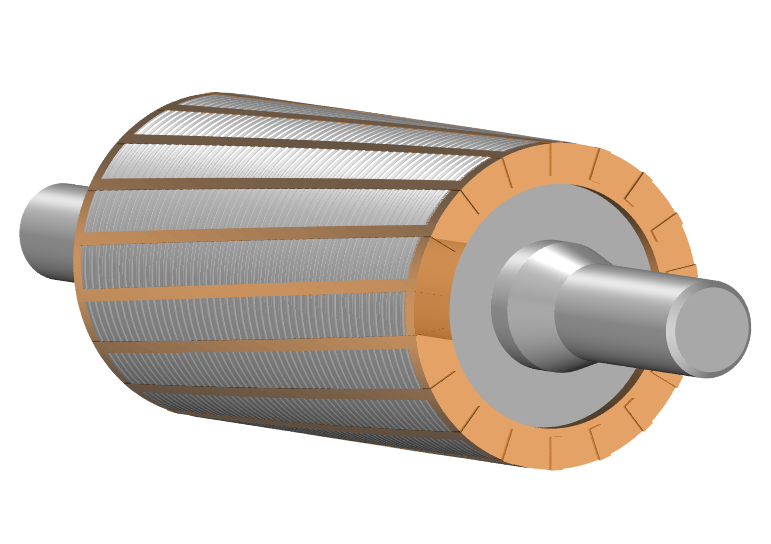
A normal gear passes power through teeth that touch and push each other. A magnetic gear does the same job with no contact: rows of magnets on each rotor push and pull each other through an air gap, transmitting torque like invisible teeth.
It sounds futuristic, but the principle is simple — like poles repel and opposite poles attract, so magnets on one rotor drag the magnets on the other rotor around with them.
The big advantages
- No wear — nothing touches, so nothing grinds down, and no lubrication is needed.
- Overload protection — if the load jams, the magnets slip instead of breaking teeth, then re-engage when the load clears.
- Quiet and clean — no metal-on-metal noise and no oil leaks, which suits food, medical and vacuum environments.
The trade-off
Magnetic gears transmit less torque per size than mechanical gears, so a magnetic gear for the same job is larger and costlier. That keeps them a specialist choice rather than the default — though designs keep improving.
Where they are used
Classic targets are wind turbines (replacing heavy, failure-prone gearboxes), marine drives, pumps and any machine where oil leaks or gear wear are a problem. They are also combined with motors in compact "magnetic gearbox" designs.
Not the same as a magnetic coupling
A magnetic coupling joins two shafts through a sealed wall, while a magnetic gear changes speed and torque like a real gearbox. If speed in equals speed out, it is a coupling; if the ratio differs, it is a gear.
Read on: magnetic couplings → · magnets in motors →