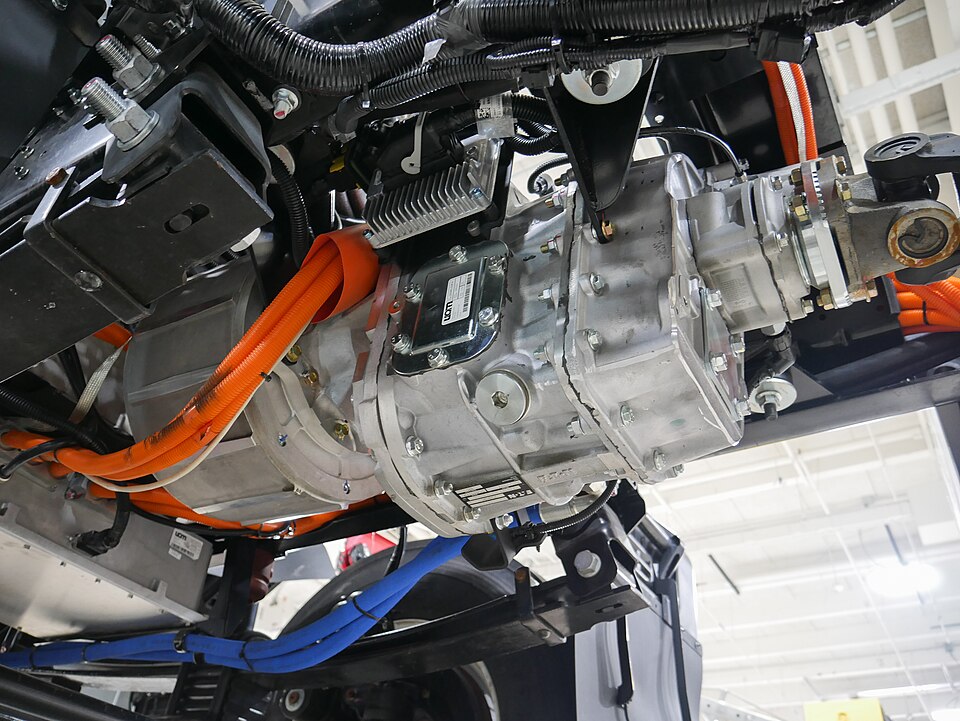
When you watch a modern robot arm move, you are watching magnets at work. Every joint contains a small motor, and inside nearly every one of those motors spins a rotor built around NdFeB magnets.
Motors in every joint
Robot joints use servo motors and brushless DC motors, which need strong, compact rotors. NdFeB delivers the highest strength per size, so designers can fit powerful motors into slim arms without adding bulk. That is why today's robots are smaller, faster and more precise than the clunky machines of the past.
Grippers that hold parts
Many robot grippers are simply magnets with a release mechanism. They pick up ferrous parts — steel sheets, engine blocks, cans — instantly, without fingers or suction cups. For flat steel workpieces, magnetic gripping is fast, gentle and reliable.
Knowing where the joint is
Robots also use magnets to sense position. A small magnet on a motor shaft spins past a Hall sensor, and the controller counts the pulses to know the exact angle of every joint. Magnetic encoders are rugged and work in dust and oil, where optical encoders fail.
Sealed drives
In food and chemical plants, motors must be sealed. Magnetic couplings transmit torque through a stainless steel wall, so no shaft seal can leak. The same trick powers pumps in robots that handle hazardous liquids.
Practical tip
If you are designing a robot joint, remember that NdFeB is strong but brittle — protect the rotor magnets from impact, and keep operating temperatures within the magnet's rating.
Read on: magnets in electric motors → · Hall sensors explained →