A servo motor is not just a motor — it is a complete motion system: a motor, a position sensor, and a controller that closes the loop. The result is precise control of position, speed and torque.
What makes it a servo
The key word is feedback. The motor turns, the encoder measures where the shaft actually is, and the controller compares that with the commanded position. If the shaft is off target, the controller instantly corrects. This closed loop is what allows a servo to hold a position under load and follow complex motion profiles smoothly.
Three parts, one system
- The motor — usually a brushless or permanent-magnet design for fast response and smooth torque.
- The encoder — reports the shaft angle back to the controller.
- The controller — compares command to reality and adjusts the drive current constantly.
Where you will find them
Industrial robots run on servos — every joint is a servo axis. CNC machines use them for precise cutting paths, packaging lines for rapid indexing, and small RC servos steer model cars, planes and boats. Whenever a machine must move fast, stop exactly, and hold its position, a servo is usually the answer.
The magnet angle
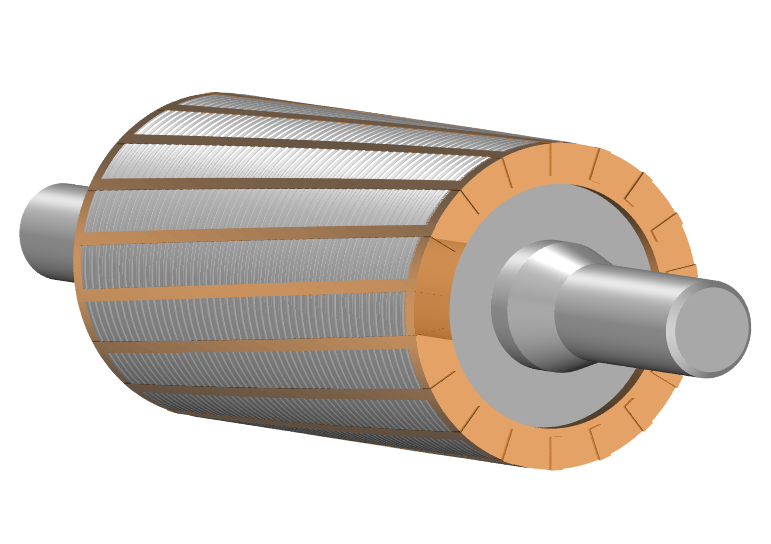
Servo motors favor permanent-magnet rotors because strong magnets give high torque in a compact frame — and torque is what a servo trades in. The rotor magnets are typically NdFeB, and some designs add Hall sensors inside the motor to help the drive commutate, while the main position feedback still comes from the encoder.
Read on: magnets in motors → · Hall sensors explained →