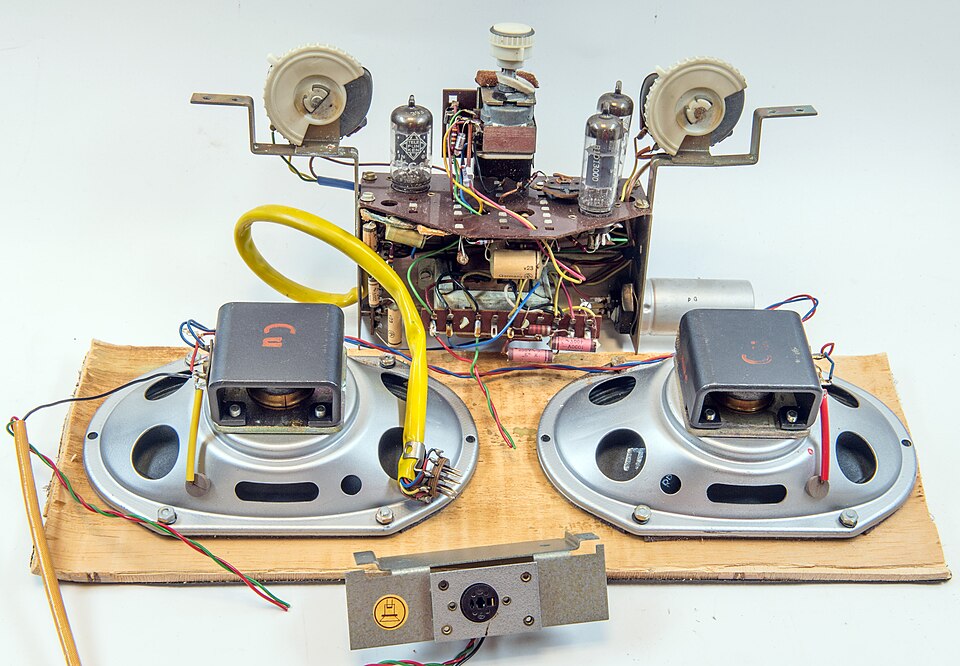
Look inside almost any loudspeaker and you will find a magnet — often a ring of dark gray ferrite or a compact block of rare earth. The magnet is not a decoration; it is what makes sound possible.
How a speaker makes sound
A speaker has three key parts: a magnet that creates a steady magnetic field, a voice coil (a coil of wire) sitting in that field, and a cone attached to the coil. When music plays, the amplifier sends a changing electric current through the coil. A wire carrying current in a magnetic field feels a force, so the coil — and the cone — is pushed back and forth. The moving cone pushes air, and that is the sound you hear.
Why the magnet matters
The stronger the magnetic field, the more force the coil feels for the same current. A strong magnet gives a speaker more power, better sensitivity and tighter control — the cone starts and stops faster, so drums and bass sound clean instead of mushy.
Which magnets speakers use
- Ferrite — cheap and rust-proof, but weak per size, so it needs to be big. The classic choice for large cabinet speakers and woofers.
- NdFeB — the strongest magnet family, so the smallest size for the same field. This is what makes thin phone speakers and tiny earbuds possible.
- AlNiCo — the vintage choice from the 1950s, prized by audiophiles for its stable field, but expensive because of cobalt.
Next time you hear a song, remember: a magnet turned the electricity into the sound.
Read on: ferrite magnets explained → · what is NdFeB →